Dog Sports: Which One Suits You and Your Dog?
Agility, flyball, hoopers, obedience, rally, canicross, nosework, ring sports, dog dancing and disc dog compared: what each involves, which dogs and handlers they suit, and where to start in Belgium.

There has never been more choice in dog sports. Whether your dog is a border collie who would happily run all day, or a gentle veteran who just needs a job for the brain, there is a sport that fits. This guide compares the main options, starting with the one this site is all about: agility. It also helps you work out where to start in Belgium.
Agility: the all-rounder
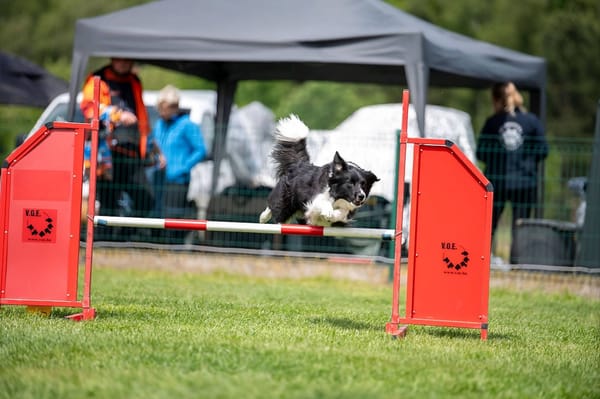
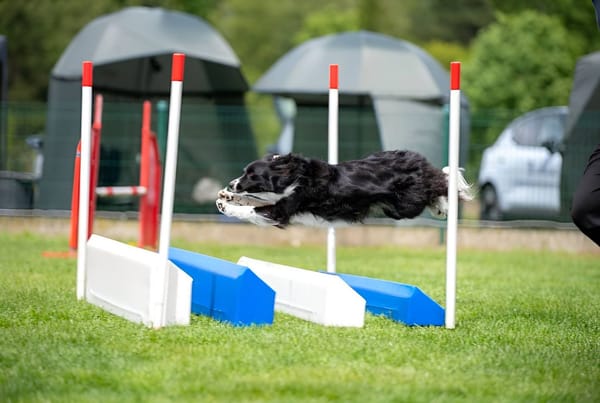
Agility is the sport most people picture when they think of dog sports, and for good reason. Dog and handler run together around a course of jumps, tunnels, weave poles and contact obstacles (A-frame, dog walk, seesaw). The handler guides the dog with body language and voice, and the team is judged on faults and time.
Why agility is often the best first choice:
- Almost any healthy dog can do it. Courses are set in height categories, so small and large dogs compete on equal terms. See Best Dog Breeds for Agility for the dogs that excel, and why yours can join in too.
- It's a real partnership. You run the course with your dog, so it keeps you fit too.
- It builds everything else. Focus, body awareness, distance handling and confidence carry over into every other sport.
- It's well organised in Belgium. Clubs, beginner classes and competitions are found across the country.
New to the sport? Start with What Is Dog Agility?, then How to Start Agility With Your Dog. For young dogs, see Puppy Foundations for Future Agility Dogs.
Agility in Belgium: VOE and DSAB
Two Belgian organisations stand out for agility competitors, especially newcomers:
- VOE (Hondenfederatie Vrienden Onder Eén). A federation of clubs recognised by Sport Vlaanderen and a member of the IFCS. Its agility calendar runs from recreational and youth classes up to Grade 1 and the open class. The season ends with a Belgian Championship and a Superprestige ranking. VOE also holds yearly selections for the IFCS World Agility Championships (WAC) and the IMCA (International Mixbreed Championship in Agility). VOE makes no distinction in its rankings between pedigree dogs, dogs without papers and mixed breeds.
- DSAB (DogSport Agility Belgium). Based in Lebbeke, DSAB runs agility competitions in the World Agility Open (WAO) style, with agility, jumping and games such as gamblers and snooker. It also organises the Belgian try-outs for the World Agility Open.
Belgium also has FCI agility through the KKUSH clubs (section 4C) and agility within the NVBK. For a full comparison of all four routes, with licences, classes and international pathways, read Agility in Belgium: The Complete Guide, then How to Start Competing in Agility in Belgium and Finding an Agility Club in Belgium.
The other dog sports at a glance
| Sport | What it involves | Physical demand (dog) | Handler runs? | Best for |
|---|---|---|---|---|
| Agility | Obstacle course, handled at speed | Medium–high | Yes | Most fit dogs, active handlers |
| Hoopers | Hoops, barrels, tunnels; handler stays in a box | Low | No | Young, older or less robust dogs; distance handling |
| Flyball | Team relay over hurdles to a ball box | High | No | Ball-mad, fast dogs; team players |
| Obedience | Precise set exercises judged on quality | Low–medium | No | Detail-loving handlers, all breeds |
| Rally obedience | Course of signs; you may talk to your dog | Low | No (walking pace) | Beginners, seniors, relaxed teams |
| Canicross | Cross-country running, dog attached by a bungee | High | Yes, a lot! | Runners with energetic dogs |
| Nosework | Finding a hidden odour | Low | No | Every dog; shy, reactive or recovering dogs |
| Ring sports and IGP | Obedience, jumps, tracking and protection work | Very high | Some | Working breeds, very committed handlers |
| Dog dancing | Choreographed routine to music | Low–medium | Moves with the dog | Trick lovers, creative handlers |
| Disc dog | Throwing and catching discs | High | Throws | Toy-driven athletic dogs, good throwers |
Hoopers: agility's gentle cousin
No jumps, no contacts, no weaves. The dog flows around hoops, barrels and tunnels while you direct from a small handling area. The FCI approved international hoopers regulations in 2026. In Belgium, hoopers has its own KKUSH section (3A) and is listed among VOE's disciplines. It is a great way to start a young dog, keep a retired agility dog busy, or sharpen distance skills. Read more about hoopers.
Flyball: the team sprint
Four dogs per team race over four hurdles to a box that fires out a ball, then back again, side by side with another team. It is loud and fast, and Belgium is among the best in the world at it. Organised by the Belgische Flyball Belge. Read more about flyball.
Obedience and rally: precision and partnership
Competitive obedience is about perfect heelwork, positions, recalls, retrieves and scent discrimination. In Belgium it is offered through VOE's obedience (GH) programme as well as the KKUSH and NVBK programmes. Rally obedience is the relaxed version: a course of signs, where you can encourage your dog throughout. Both suit dogs of every size and build skills that help agility, such as start-line stays and focus.
Canicross: run together
If you already run, canicross is the obvious choice. The dog pulls ahead in a harness while you follow on a bungee line. Races in Belgium are organised by the Belgian Canicross Federation. Read more about canicross.
Nosework: the brain game
Every dog can sniff. Nosework teaches your dog to find a target odour in boxes, rooms, outdoor areas and around vehicles. It is ideal for dogs that can't do physical sports, and a great complement to agility on rest days. Read more about nosework.
Ring sports and IGP: Belgium's working dog heritage
Belgian Ring, Mondioring and IGP test obedience, jumps, tracking and controlled protection work. VOE runs its own protection programme, Mondial Dogsport. These are specialist sports for dedicated handlers of working breeds, taught only at specialist clubs. Read more about ring sports.
Dog dancing: the creative option
Heelwork to music and freestyle combine tricks, heelwork and choreography. Dog dancing is available through VOE and the KKUSH clubs. Read more about dog dancing.
Disc dog: catch!
Toss-and-fetch rounds and freestyle routines with flying discs. Spectacular, but hard on the body if done carelessly, so learn safe throwing and catching. Read more about disc dog.
How to choose
Ask yourself five questions.
1. What does your dog love? A ball-obsessed dog may adore flyball or disc dog. A dog that lives nose-down suits nosework. A dog that loves to move with you and learn new things is a natural for agility.
2. What is your dog's body like? Age, size, build and health matter. Sports with lots of jumping and turning (agility, flyball, disc dog, ring sports) need a fit, mature dog. Hoopers, rally and nosework are kind to growing or older bodies. Always check with your vet, and read Fitness, Warm-Up and Injury Prevention.
3. What do you want to do? Run (agility, canicross)? Stand still and direct (hoopers)? Perform (dog dancing)? Train detail (obedience)? Be part of a team (flyball)?
4. How much time can you commit? Most sports take one or two club sessions a week plus short home practice. Ring sports and IGP need much more.
5. What's available near you? Agility clubs are the easiest to find in Belgium. Some newer sports may need a longer drive.
Quick suggestions
- First sport for an average healthy family dog: agility, or rally obedience if you prefer a slower pace.
- Puppy or adolescent dog: puppy foundations for agility, hoopers basics and nosework games.
- Senior or recovering dog: nosework, rally or hoopers.
- High-drive working breed: agility, flyball, and (with the right club) ring sports or IGP.
- You love running: canicross, and agility for the handling challenge.
You don't have to pick just one. Many dogs do agility as their main sport and something else alongside it: nosework on rest days, rally for focus, canicross for fitness.
Getting started in Belgium
- Visit before you join. Watch a training session and a competition. Most clubs and federations welcome spectators.
- Choose a club, not just a sport. A friendly club with good instructors matters more than anything else.
- Check the organisation. Each sport has its own federation and rules. For agility, start with Agility in Belgium to compare VOE, DSAB and the other routes.
- Start a beginner's course. Most clubs run them several times a year.
Fees, calendars and rules change every season, so always check the federation's own website for the latest information.