Dog Dancing and Heelwork to Music
Dog dancing combines trick training, heelwork and choreography, set to music. The two FCI disciplines, Heelwork to Music and Freestyle, how routines are judged, first moves to teach, and where to dance with your dog in Belgium.
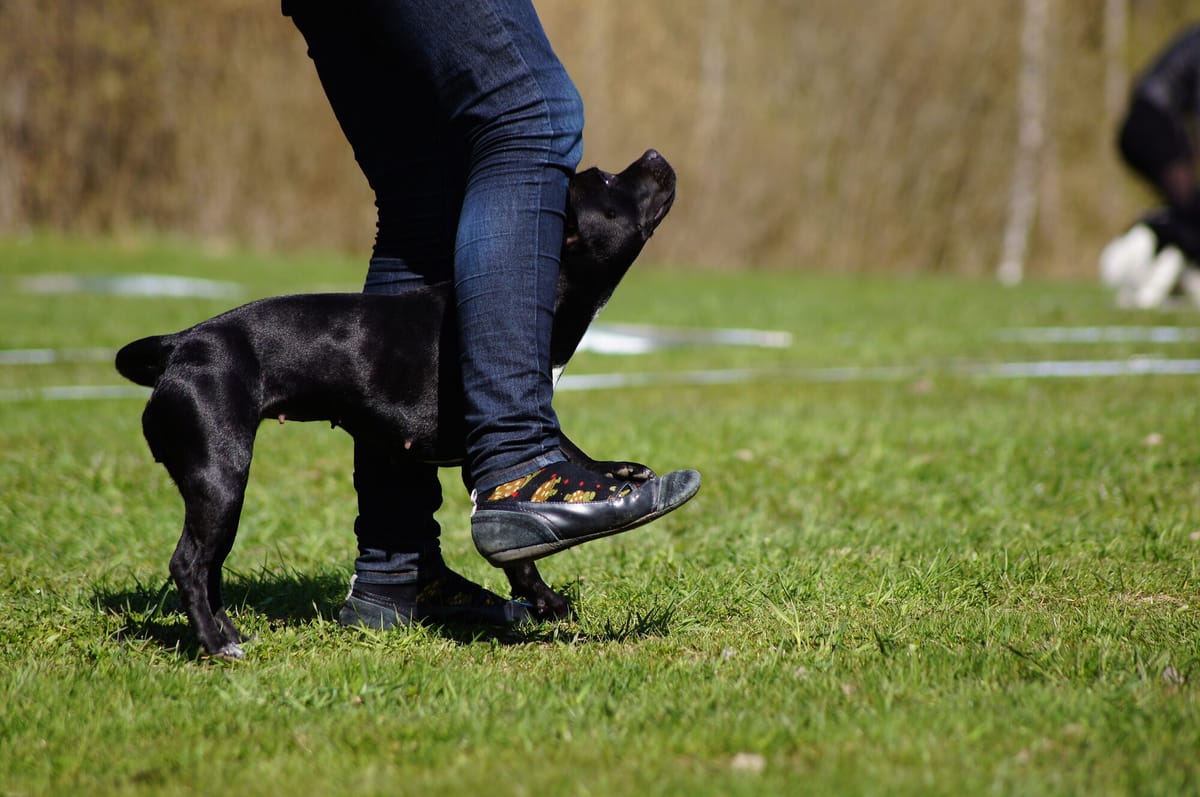
Dog dancing, also called canine freestyle, is the most creative of the dog sports. You and your dog perform a choreographed routine to music: weaving through your legs, spinning, walking backwards, moving in heel position on both sides, bowing, and whatever else you can teach and set to the beat. It looks like a show (and it is), but under the sparkle it is precise, demanding training.
What is dog dancing?
Dog dancing grew out of heelwork to music, which was in turn developed from obedience. The Belgian federation VOE compares it to the "kür" (freestyle to music) in dressage riding.
The FCI Dog Dancing regulations describe the aim as a dog and handler who devise and perform together "an artistic routine combined with music", with obvious cooperation between a willing dog and a supportive handler. There are two disciplines.
Heelwork to Music (HTM)
- At least 75% heelwork moves, and at most 25% freestyle.
- The dog may never be more than 2 m from the handler.
- In the ideal heelwork position, the dog stays parallel to the handler at a constant distance of no more than 15 cm. The FCI lists several recognised positions: on the left, on the right, inverted (facing the handler) on either side, in front, behind, and so on.
- Think of it as heelwork that flows through many positions and directions in time with the music.
Freestyle (FS)
- At least 75% freestyle moves, and at most 25% heelwork.
- All moves are allowed, as long as they don't endanger the dog's health.
- Ideal freestyle has a wide variety of moves, linked fluently and following changes in the music.
How a competition works
Each team performs its routine to its own music. Under FCI rules, the music may last no more than 4 minutes, and going over means disqualification. Props are allowed if they are part of the concept. The FCI's judging criteria include technical content, artistic interpretation (the structure of the routine, how the music suits the dog's movement, and how the handler's movement enhances the dog), and partnership and well-being. Deductions can be given for things such as dressing up the dog, a prop that isn't used, or the wrong mix of heelwork and freestyle.
For FCI international competitions, dogs must be at least 18 months old and have qualified in the highest national class in their home country. Each national organisation sets its own classes below that. The international titles are FCI-CACID certificates in Freestyle and in Heelwork to Music.
Who suits dog dancing?
- Any breed or size. The VOE calls it suitable for all people and all dogs. Small dogs can shine with quick footwork, and big dogs with impressive moves.
- Handlers who enjoy training tricks and are happy to perform. A little musicality helps, but you don't need dance training.
- Dogs that can't jump or sprint. Routines can be built around the dog's physical abilities. Avoid moves that strain the back, such as long periods on the hind legs, especially with older dogs.
How to start training
Dog dancing is trick training first and choreography later. Build a "vocabulary" of moves, each on its own cue, then string them together.
1. Spin and twist
Lure your dog in a small circle to the right with a treat and reward. Repeat to the left. Add separate verbal cues for each direction, then fade the lure into a small hand signal.
2. Leg weaves
Stand with your legs apart and lure your dog through between your legs in a figure of eight as you step forward. Start with a single pass and build up.
3. Heel on both sides
Teach your dog to walk at your left and at your right, each on its own cue. Then teach it to switch sides, behind you and in front of you.
4. Backing up
Use a narrow corridor (for example along a sofa) and reward any step backwards. Backing up is a staple of both HTM and freestyle.
5. A finishing bow
Reward your dog for lowering its front end while its rear stays up. It makes a lovely end to a routine.
When you have 8–10 moves on cue, choose a piece of music that matches your dog's natural trotting rhythm. Then sketch a simple routine of 1–2 minutes. Film it: the camera shows what the audience (and judge) will see.
Equipment
You hardly need anything: treats, a target stick or target mat for teaching positions, a speaker for music, and a non-slip surface. Props such as an umbrella, a hat or a small stool can come later if they fit your concept.
Dog dancing in Belgium
You can dance with your dog through two Belgian structures:
- KKUSH clubs: VdA section 5B Dog Dance. The VdA (Vergadering der Afgevaardigden), which groups the clubs of Belgium's FCI-recognised kennel organisation KKUSH, has a dedicated section 5B Dog Dance. The section page links to documents, news and training dates, and lists its contact people. FCI dog dancing competitions, with CACID certificates, run through the FCI national organisation.
- VOE. The VOE federation lists dog dance among its disciplines and says its clubs can take part in national and international competitions in agility, obedience, dog dance and Mondial Dogsport (VOE, aims). VOE makes no distinction between dogs with or without a pedigree. Handlers from other federations can enter VOE competitions after requesting a one-off participant number. Ask the VOE secretariat about upcoming dog dance training and events, since its online calendar mainly lists agility and obedience.
DSAB focuses on agility and does not organise dog dancing.
To get started, contact the section or federation and ask which clubs near you have a dog dance group. Many dancers also take online courses and get feedback by video, which is how a lot of people train between club sessions.
From the dance floor to the agility ring
The body awareness, rear-end control and side-switching cues from dog dancing are useful in agility, and many agility handlers use dancing tricks as warm-up exercises. If you would like to add speed, start with What Is Dog Agility?, or compare sports in our dog sports overview. If you are drawn to precision heelwork, look at competitive obedience too.