What Is Dog Agility? A Complete Beginner's Guide
Agility is a fast, fun sport in which a handler guides a dog around a course of jumps, tunnels, weave poles and contact obstacles, with no lead and no treats. Here's how it works, who it suits and how to begin.

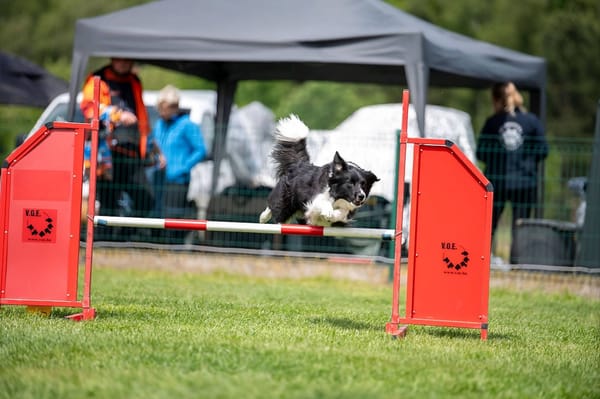
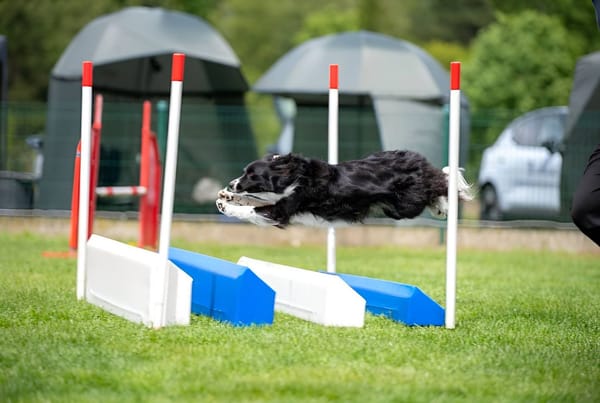
Picture a dog flying over a jump, diving into a tunnel, threading through a line of poles and bursting out the other side, while its handler sprints alongside pointing the way. That is agility: a timed obstacle course for dogs, run as a team with a human partner. It is one of the most popular dog sports in the world, and Belgium has a lively agility scene with competitions almost every weekend.
This guide explains what agility is, how a run is scored, what the obstacles are, who the sport suits and how you can start.
Agility in one paragraph
A judge designs a course of 15 to 22 obstacles, numbered in order. The handler walks the course without the dog to plan a route, then runs it with the dog off lead. The handler may use voice, body and arm signals, but may not touch the dog or the equipment and may not carry food or toys. The team with the fewest faults wins; if faults are equal, the fastest time wins.
That's the whole sport. What makes it addictive is everything in between: the training, the communication, and the split-second decisions you make together with your dog at full speed.
A brief history
Agility was born in the UK. In 1978 it was presented as entertainment during a break at Crufts, the famous dog show, inspired by equestrian show jumping. The crowd loved it, and within a few years it had its own rules and competitions. The sport spread rapidly across Europe and beyond. Today the Fédération Cynologique Internationale (FCI), the world canine federation (headquartered, as it happens, in Thuin in Belgium), sets the international rules, and the FCI Agility World Championship brings together the best teams from dozens of countries every year.
How a run is scored
Agility is judged on two things: faults and time.
- Course faults come in units of five. Knocking down a pole, missing a contact zone, or a refusal (stopping in front of an obstacle, running past it) each cost 5 faults.
- Time faults are added for every second (to the hundredth) you are slower than the standard course time (SCT).
- Elimination happens for things like taking an obstacle in the wrong order, three refusals, exceeding the maximum course time, or the dog leaving the ring.
A "clear round" means zero faults within the standard course time, and that is what everyone is chasing. You will find the full detail in our article on the FCI agility rules.
Agility and jumping
Most competitions offer two types of run:
- Agility courses include the contact obstacles (A-frame, dogwalk and seesaw) as well as jumps, tunnels and weaves.
- Jumping courses leave out the contact obstacles and are typically faster and flowing.
Both are run at three levels, from beginner (1) to the highest level (3). Dogs move up by achieving clear, placed rounds.
The obstacles
Under FCI rules the obstacles fall into three groups:
| Group | Obstacles |
|---|---|
| Jumps | Single and spread hurdle, wall, tyre, long jump |
| Contacts | Dogwalk, seesaw, A-frame |
| Others | Tunnels, weave poles |
The contact obstacles have coloured "contact zones" at the bottom that the dog must touch with at least one paw; on the seesaw both the up and down zones count. The weave poles are a line of 12 poles that the dog must slalom through, always entering with the first pole on its left shoulder. We explain every obstacle in detail in Every Agility Obstacle Explained.
Height categories: every size of dog can compete
Agility is not just for Border Collies. Under the current FCI rules dogs are divided into four categories by their height at the withers:
| Category | Height at withers | Hurdle height |
|---|---|---|
| Small (S) | under 35 cm | 25–30 cm |
| Medium (M) | 35 to under 43 cm | 35–40 cm |
| Intermediate (I) | 43 to under 48 cm | 45–50 cm |
| Large (L) | 48 cm and over | 55–60 cm |
So a Jack Russell competes against other small dogs, not against a Malinois. The Intermediate category was added in 2023 to give mid-sized dogs a fairer, safer jump height. Other organisations use their own height systems. DSAB in Belgium, for example, uses the World Agility Open's five jump heights, so the exact numbers depend on where you compete.
Who is agility for?
Dogs
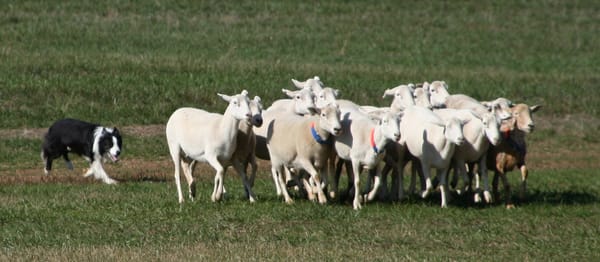
Almost any healthy, sound dog can enjoy agility training. The classic high-flyers are herding breeds such as Border Collies, Shetland Sheepdogs and Australian Shepherds, but you will also see Poodles, Papillons, terriers, spaniels, mixed breeds and rescue dogs on the podium. What matters most is:
- Good physical health. Get a vet check before you start, especially for hips, elbows and back.
- Motivation. A dog that loves toys or food and enjoys working with you will learn faster.
- Age. Puppies can learn foundations, but full-height jumping and contacts should wait until the dog is physically mature (often 12 to 18 months, depending on breed). Competitions in most FCI countries are open from 18 months.
See Best Dog Breeds for Agility for more.
Handlers
You don't need to be an athlete. Plenty of competitors are in their sixties and seventies, and good handlers win through timing and positioning rather than raw speed. Distance handling skills let you direct your dog from further away. What you do need is patience, a sense of humour and a willingness to learn from your mistakes. Agility is famously humbling.
Why people love it
- Bonding. Agility is pure teamwork. You learn to read your dog and your dog learns to read you.
- Exercise, physical and mental. Dogs come home from training tired and content, and so do their handlers.
- Confidence. Shy dogs often blossom as they master new obstacles.
- Community. Agility clubs are social places. Belgian competition weekends are part sport, part picnic, part reunion.
- There's always more to learn. From your first tunnel to a world championship course, the sport keeps challenging you.
What does it cost?
Agility is relatively affordable. Expect club membership and a course fee for lessons, a decent harness or collar and lead for warm-ups, plenty of treats and toys, and later competition entry fees and a licence. Some people buy a few practice jumps or a set of weave poles for the garden, but you don't need any equipment at home to begin. Fees vary per club and organisation, so ask locally.
How to get started
- Check your dog's health with your vet.
- Work on the basics: a reliable recall, a sit or down stay, and walking nicely near other dogs.
- Find a club with qualified trainers and a beginner group. In Belgium many clubs are affiliated with VOE (Hondenfederatie V.O.E.), and DSAB (DogSport Agility Belgium) organises its own competitions that are popular with handlers from many clubs. See Finding an Agility Club in Belgium.
- Build foundations before full obstacles: body awareness, following your hand, going around things, driving to a toy. Our guide How to Start Agility With Your Dog takes you through the first months.
- Enter your first competition when you and your dog are consistent in training. Your First Agility Competition tells you what to expect.
Agility in Belgium
Belgium is a great country for agility: it's small, so most competitions are within an hour or two's drive, and there is a full calendar from early spring to late autumn plus indoor events in winter. Belgian competitors run under organisations such as VOE and DSAB, each with its own calendar, licence and championship, and KKUSH (the Belgian FCI member) is the route to FCI international events. Our complete guide to agility in Belgium explains how the organisations work and how to choose where to start, and How to Start Competing in Agility in Belgium walks you through the licence and paperwork.
Is agility right for you?
If you have a healthy dog that likes to move and a free evening a week, agility is well worth trying. Many clubs offer a trial lesson. Book one, see how your dog lights up the first time it shoots out of a tunnel, and you'll understand why so many people never look back.